


For years, we’ve been largely defined by centralized social media giants – Facebook, Twitter, Instagram. But a new movement is gaining traction: federated social media. Platforms like Mastodon, Pleroma, and Misskey are challenging the status quo, offering a fundamentally different approach to online connection. But are they a revolutionary solution, or just another tech fad? Let’s break down the pros and cons.
What is Federated Social Media?
Unlike centralized platforms where all your data and interactions live on one company’s servers, federated platforms operate on a distributed network. Think of it like email – you can use Gmail, Outlook, or Yahoo Mail, but they all communicate with each other to deliver your messages. Federated social networks use protocols like ActivityPub to allow different servers (“instances”) to connect and share data. Each instance is run by a different community, often with a specific theme or focus.
The Good: Why Federated Platforms Are Exciting
Decentralization & Control: This is the biggest draw. You’re not beholden to a single company’s rules, algorithms, or potential data breaches. You choose the instance you want to join, aligning with its moderation policies and community values.
Community-Driven Moderation: Each instance has its own moderation team, leading to a more targeted and responsive approach to content rules. Want a space free of hate speech? Find an instance dedicated to respectful discussion.
No Algorithmic Manipulation: You see posts in chronological order, or you can tailor your feed with lists. You’re in control of what you see, not an algorithm designed to keep you scrolling.
Privacy Focused: Data stays largely on the instance you join. There’s less central tracking and potentially less exploitation of your personal information.
Diverse Communities: The decentralized nature fosters smaller, more specialized communities around interests, hobbies, and ideologies. There’s a likely instance for almost everything.
Resilience: Because it’s distributed, a single server outage won’t take down the entire network.
The Not-So-Good: Challenges and Considerations
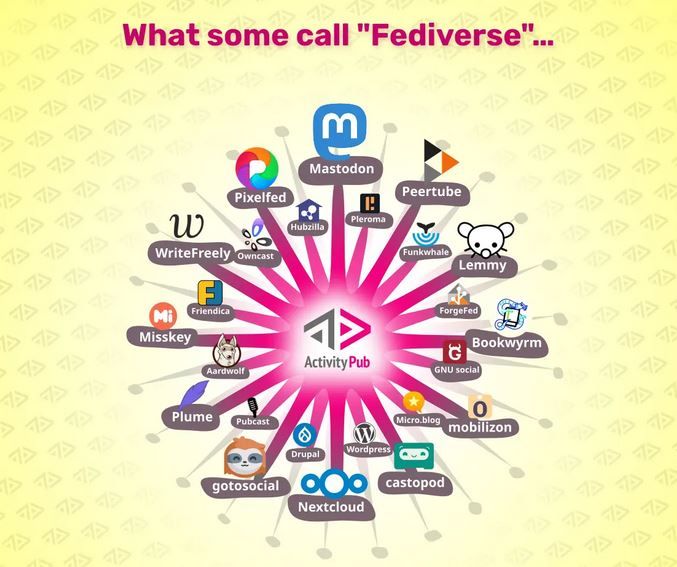
Fragmentation & Discovery: This is the biggest hurdle. There are hundreds of instances, and finding the right one can be overwhelming. It’s far less intuitive than joining Facebook.
Smaller Networks: Because instances are smaller, the potential user base is smaller too. It can take effort to build a following.
Technical Learning Curve: Setting up an account and understanding how to use different instances can be a bit more technical than familiar platforms. It’s not always super user-friendly for complete beginners.
Moderation Variations: While community-driven moderation is a pro, it also means moderation policies can vary wildly between instances. You need to carefully choose an instance that aligns with your values.
Lack of Centralized Support: If you run into a problem, you’ll likely be dealing with the instance admins, not a large tech support team.
Still Early Stage: Federated social media is still young. Features and development are evolving rapidly, and things can change quickly.
Is Federated Social Media Right for You?
Federated social media is a fantastic option for users who value:
Privacy and control
Strong community values
A less manipulated online experience
However, if you prioritize:
Ease of use and massive scale
Instant connection with existing friends
A single, unified social media experience
…you might find it takes some getting used to.
Resources to Get Started:
Mastodon: https://joinmastodon.org/
Pleroma: https://pleroma.io/
Misskey: https://misskey.guide/
Fediverse Directory: https://fediverse.directory/ – A great resource for finding instances.